Every Dress Tells a Story: The Evolution of the Wedding Gown
By Claudie Benjamin
The oldest wedding gown at the Smithsonian’s National Museum of American History in Washington, D.C., is a yellow silk damask dress with a cream silk petticoat accented by silver threads. It was paired with purple silk satin shoes trimmed in silver. The bride wore it in 1759 at her family home. After a brief honeymoon, she and her new husband moved to his Mount Vernon estate.
The bride was Martha Dandridge Custis, a wealthy 26-year-old widow with four children. Her groom was George Washington, not yet president but already a renowned military leader. According to the Mount Vernon website, theirs was a lasting love match.
Martha was passionate about fashion, and her wealth afforded her access to luxury fabrics imported from Europe. Along with silks, fine lace was a prestige element of 18th-century high fashion. Wearing delicate, imported lace in colonial America made clear statements about wealth, status, and purchasing power.
For the less wealthy, “best dresses” were typically made of sturdy fabrics with the intention of wearing them again. Often handmade by mothers, brides, or local seamstresses, these dresses were practical and rarely white. Early colonial brides might wear gowns of blue, green, red, or yellow—like Martha’s. The tradition of the white wedding gown did not take hold until Queen Victoria’s 1840 wedding, when she wore white silk satin and lace.
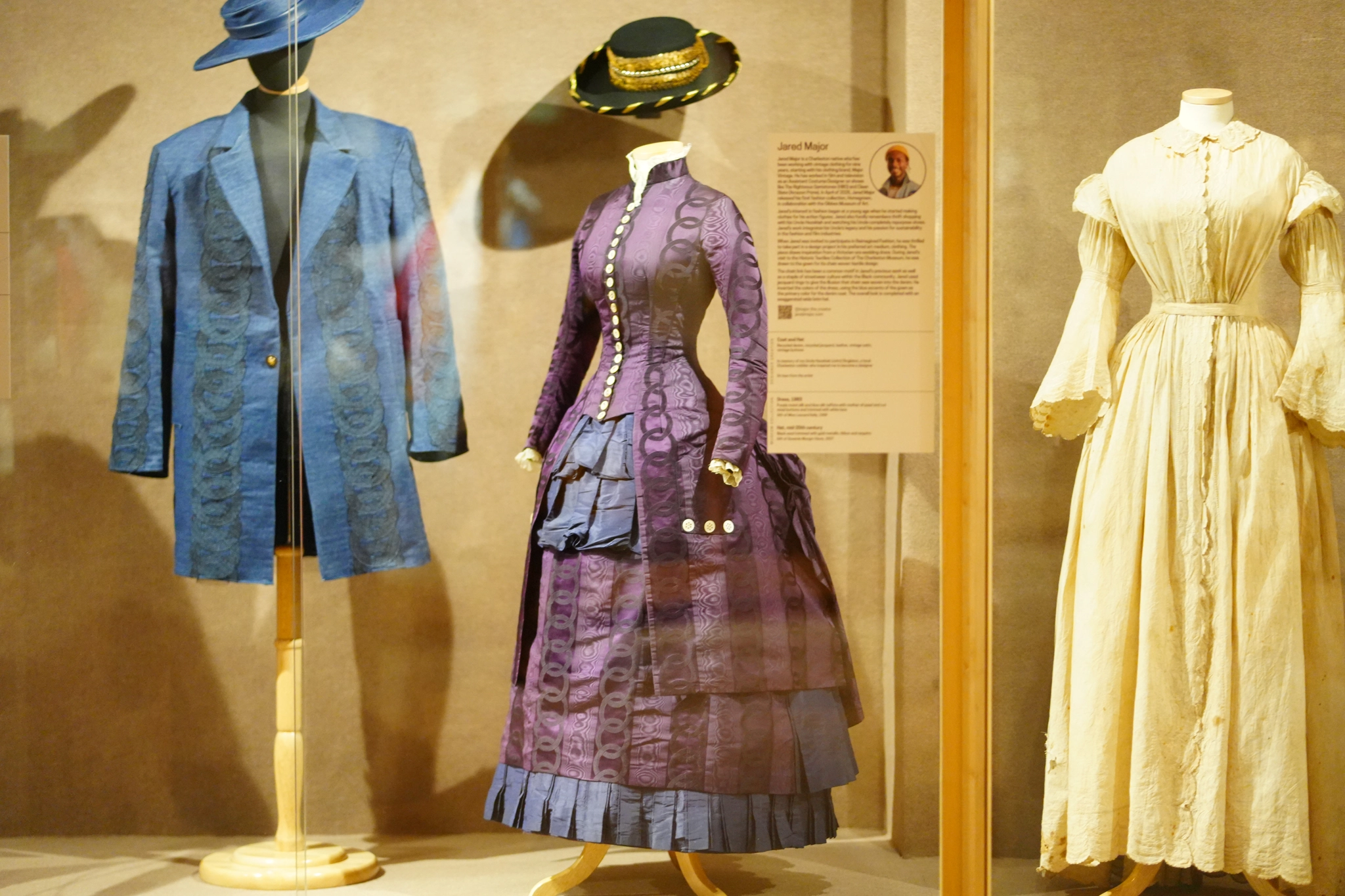
In South Carolina, from the late 1700s to the mid-1800s, wealthy brides likely had even greater shopping options, as merchant commerce was well-established and thriving. Fabrics were imported regularly, and by the early 1900s, ready-to-wear clothing appeared in department stores such as Louis Cohen Co. in Charleston. One example is a blue wool wedding suit trimmed with lace, now part of the Charleston Museum collection.
Eliza Lucas Pinckney, remembered for elevating indigo in South Carolina’s economy in the 1740s, also attempted to develop a local silk industry, but climate conditions thwarted her efforts. By the mid-18th century, most silk was imported from Asia through the British East India Company.
Much of what we know about wedding attire before the 20th century comes from garments donated to museums, descriptions in novels, diaries, and society columns. It wasn’t until the 1970s that newspapers and magazines started routinely covering society weddings, reporting every detail of a bride’s gown, veil, shoes, hair, jewelry, and bouquet. Today, paintings, photographs, film, television, and social media preserve wedding fashion.
Over time, wedding dresses have mirrored broader fashion trends. From the loose, sensual silhouettes of the 1920s to Audrey Hepburn’s modern tea-length Givenchy gown in Funny Face (1957), to daring strapless or high-slit gowns of recent decades, each era reflects shifting ideals. Hours after Super Star Taylor Swift announced her engagement to Travis Kelce in August 2025, social media speculated widely about what dress she should wear for their wedding and why. Today, a wedding gown is less about signaling wealth than it is about self-expression and personality.
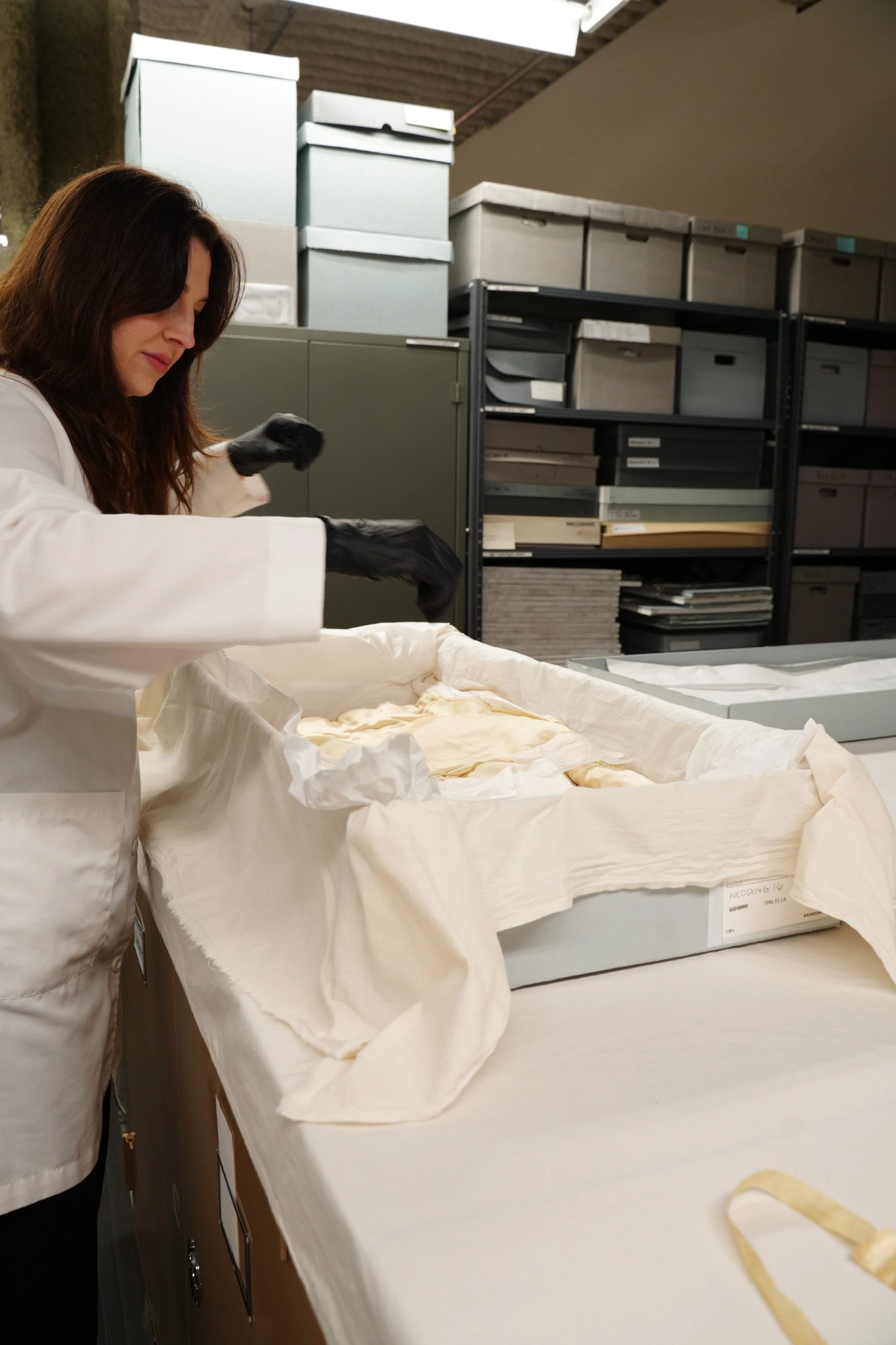
At the Charleston Museum, Curator of Historic Textiles Virginia Theerman oversees approximately 100 wedding ensembles. “The significance of the wedding collection can’t be understated,” she explains. “Many of these brides were long-ago matriarchs of families that still live in the Lowcountry today. The gowns symbolize how these lineages began, and how they will continue on into the future. Not to mention the makers who created the dresses, accessories, and trousseau clothing, forever imprinting their artistic mark on the Lowcountry’s legacy of design.”
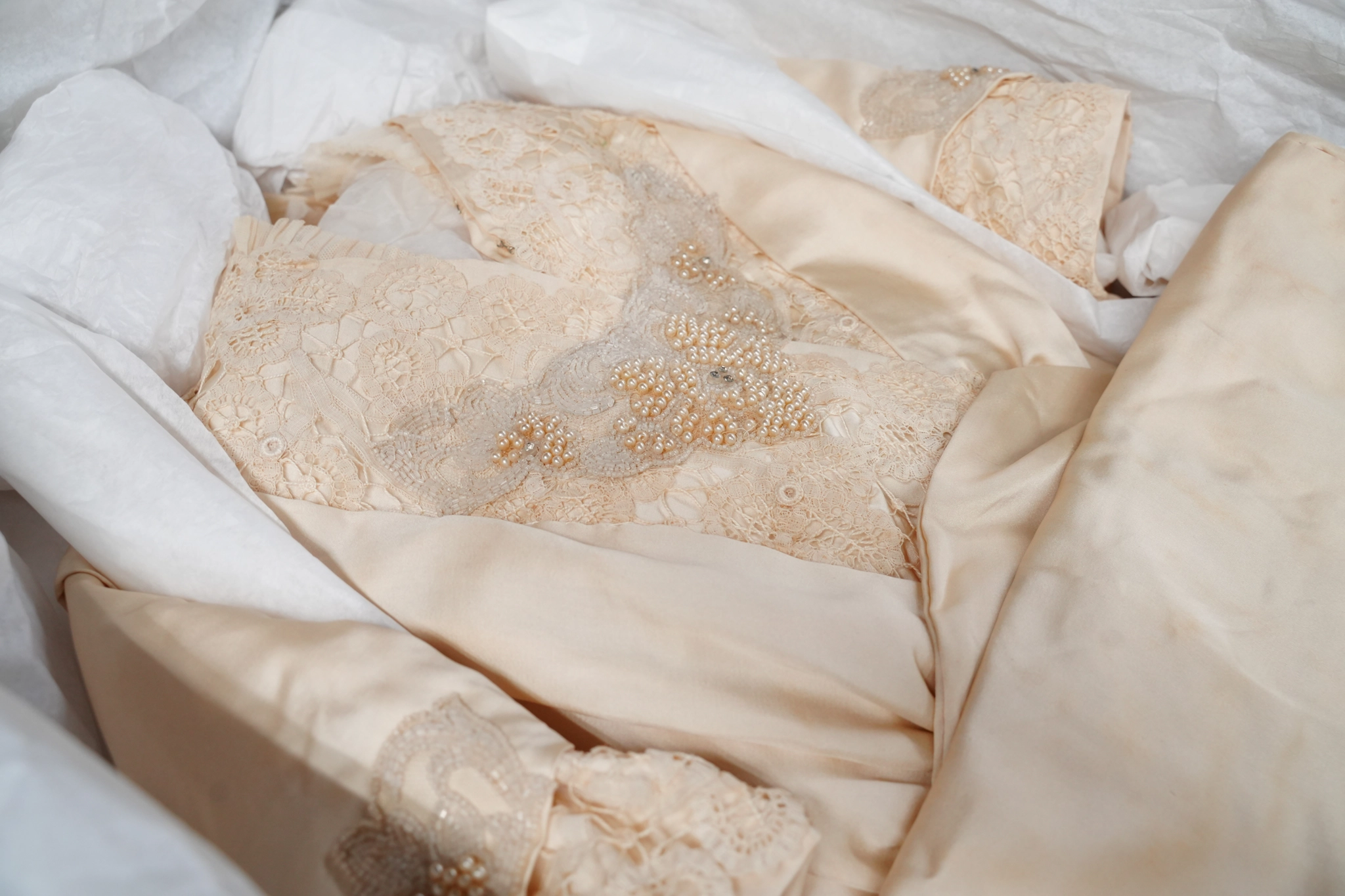
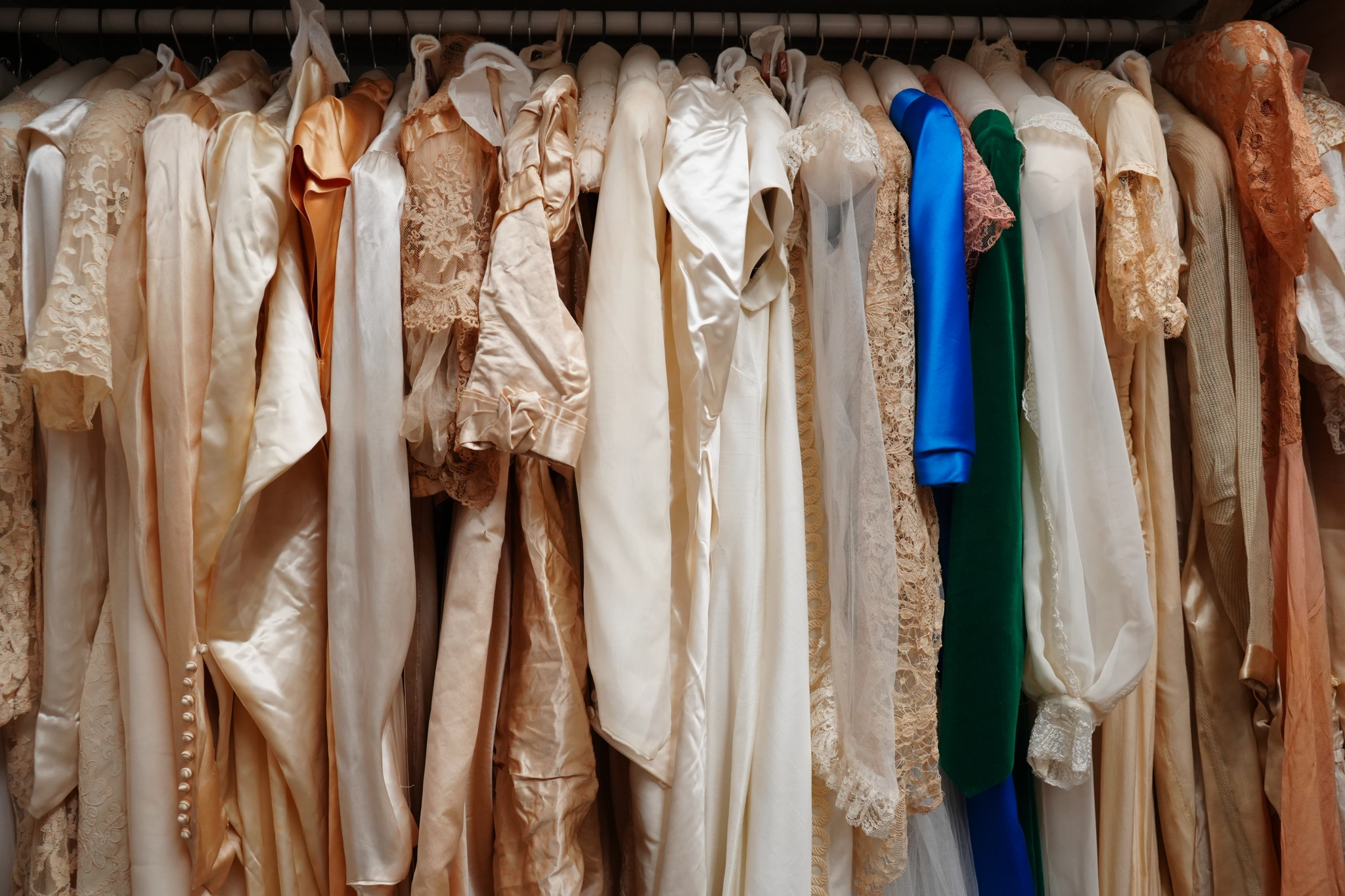
The collection spans centuries. The oldest gown dates to 1806. Some are simple muslin dresses imported from India, while others are elaborate confections of lace and pearls created by Charleston seamstresses. Dresses too fragile to hang are folded into acid-free boxes, surrounded by carefully packed veils, gloves, and shoes.
Theerman notes that she only accepts donations that tell a complete story, including gowns, accessories, invitations, photographs, and press clippings. She views the collection not just as a record of fashion, but as a reflection of world events and community values. For example, a 1942 wool suit trimmed with Persian lamb symbolizes wartime patriotism, while silk gowns from a 1945 double wedding were made from fabric a groom purchased while serving in Japan. Those dresses were donated by civil rights activist Dr. Millicent Brown. More recently, the museum has collected garments from South Carolina’s first same-sex marriage.
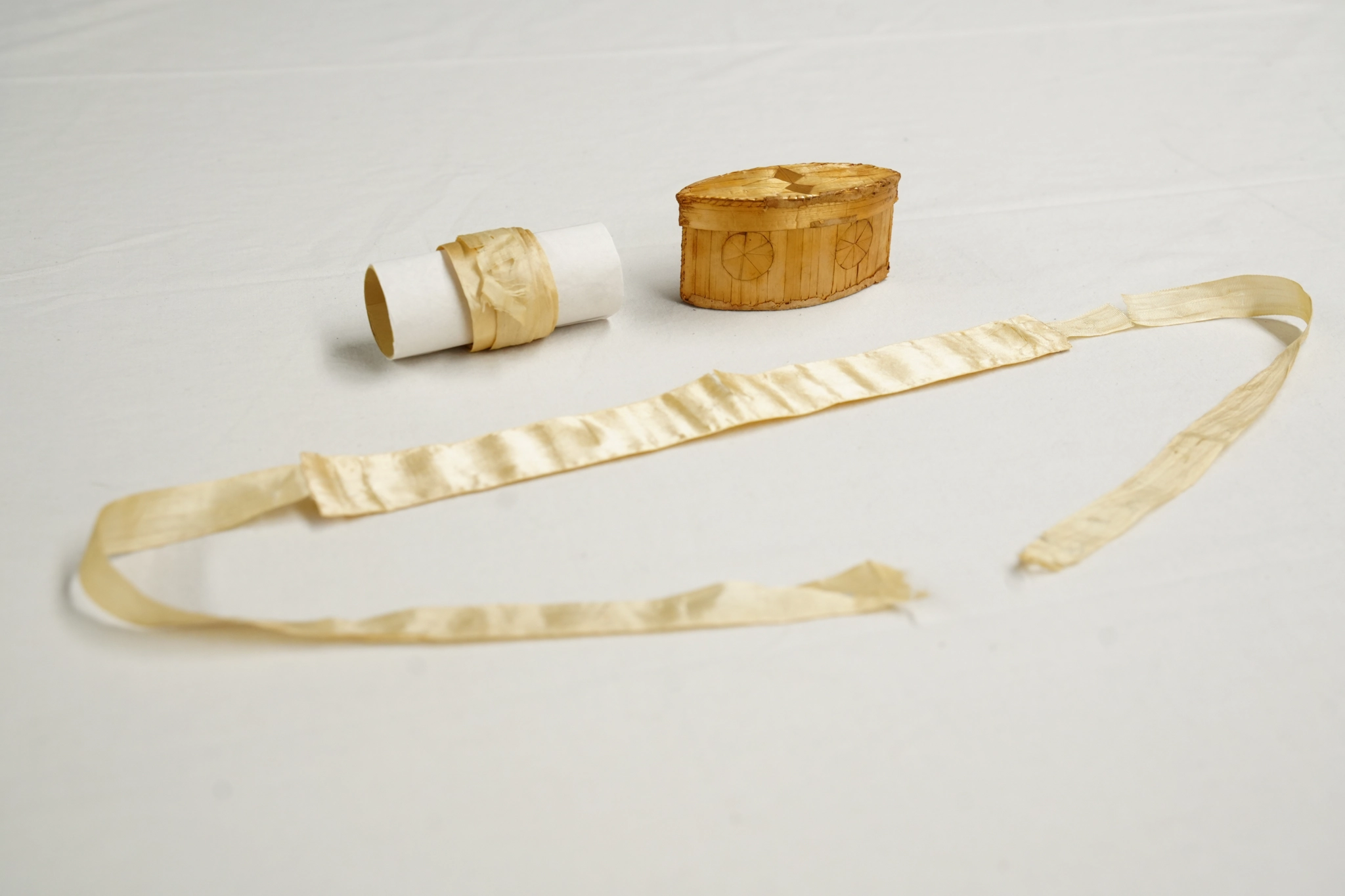
Wedding finery in the museum extends beyond gowns: garters belonging to Eliza Lucas Pinckney’s daughter and even a sequined vest worn by Revolutionary War Brigadier General Thomas Sumter at his 1766 wedding are preserved.
For generations, brides also dreamed of a trousseau—carefully assembled lingerie, slips, and “first-day dresses” meant to begin married life. Though these items are rarely worn again once donated, they remain an important part of the Charleston Museum’s narrative of community fashion and tradition.
From Martha Washington’s bold yellow silk to today’s barefoot beach bride, the story of the wedding gown has shifted from a symbol of wealth and social status to a canvas for personal expression. And as Theerman’s work shows, every dress tells a story — not just of one bride, but of the world she lived in.
For more information, visit www.charlestonmuseum.org